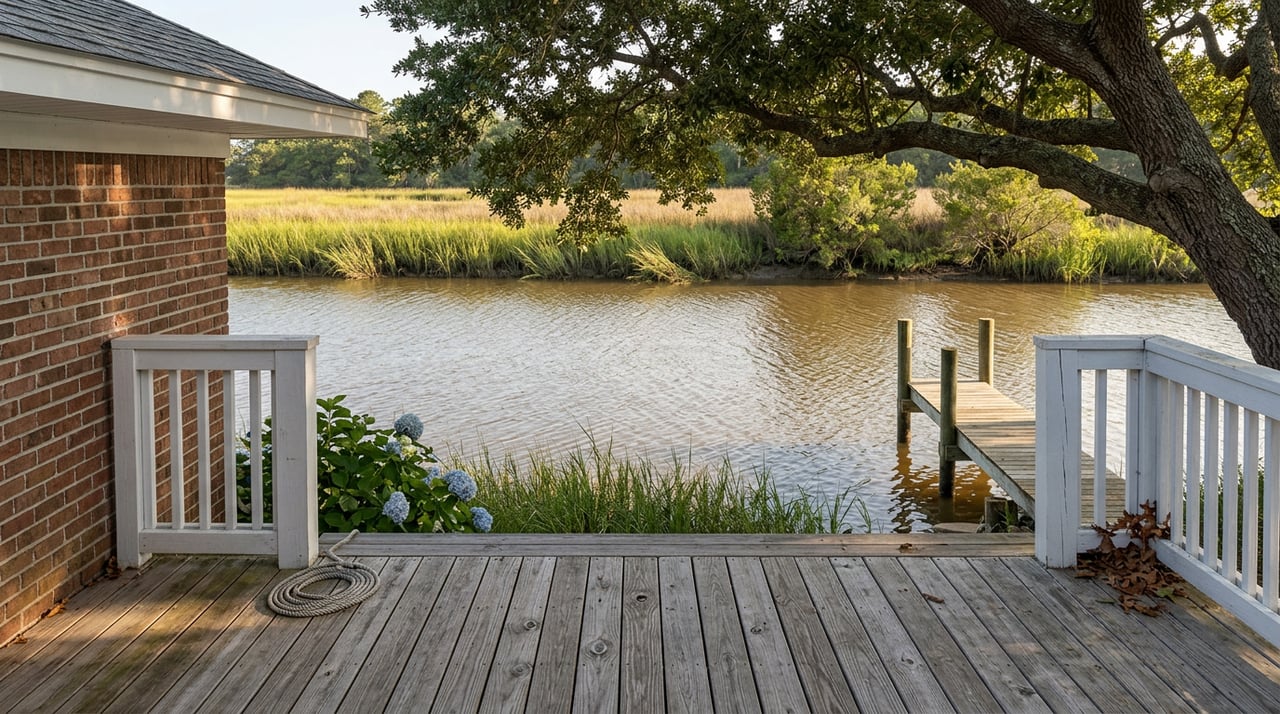
Paddle into Pleasure House Creek an hour before low tide this month and you'll see something that wasn't visible from a kayak two summers ago. Long, pale lines of oyster shell break the surface, a reef built shell by shell that Lynnhaven River Now says now holds tens of millions of oysters. A heron works the exposed edge, picking through the shallows. The water past the reef looks noticeably different than the water behind you, back toward the boat ramp.
That's not a trick of the light. It's a number, and it moved for the first time in years.
The plateau that finally moved
For most of the last two decades, the story of the Lynnhaven has been a good one that stopped getting better. Lynnhaven River Now, the nonprofit that's led the cleanup since 2002, watched the share of the river open to shellfish harvest climb from 1 percent that year to 7 percent by 2007, then keep climbing before it flattened out at 47 percent, where it sat for several years running. In March 2026, the Virginia Department of Health's Shellfish Sanitation Division opened another 250-plus acres, pushing the total to 52 percent. It's the biggest single jump the river has recorded since those first restoration years.
Brent James, the oyster restoration coordinator at Lynnhaven River Now, put it plainly when the new maps came in:
"It's like waking up on Christmas morning."
The jump isn't evenly spread. It's concentrated in the Eastern Branch of the Lynnhaven and in Linkhorn Bay near the mouths of Little Neck and Great Neck Creeks, which happen to be exactly where the nonprofit has spent recent years building sanctuary reefs. Oysters filter water as they feed, and a single oyster can filter up to 50 gallons a day, which is the practical reason the clearing shows up first around the reefs and radiates outward from there.
Where the new water actually shows up
If you paddle regularly, this isn't an abstract stat. It's the difference between the water you cross to get to Pleasure House Point and the water you're actually paddling through once you're there.
- Pleasure House Point Natural Area, at 3957 Marlin Bay Drive, gives you Pleasure House Creek, Crab Creek, and the Lynnhaven River from one launch. The city suggests parking at the Lynnhaven Boat Ramp instead and launching from there, since the Marlin Bay Drive lot requires carrying your kayak about a quarter mile on a sandy trail.
- Lynnhaven Boat Ramp & Beach Facility, at 3576 Piedmont Circle, is the easier put-in for the same water plus open Chesapeake Bay access.
- Stumpy Lake Natural Area is freshwater, not tidal. It's a 278-acre lake inside a 1,422-acre natural area with a new ADA-accessible launch and 1.65 miles of soft-surface trail around it.
- Munden Point Park and Lake Lawson/Lake Smith Natural Area round out the city's three self-service kayak kiosks.
- First Landing State Park puts you in the Narrows and out into Broad Bay, a different watershed from the Lynnhaven proper but part of the same broader story about what's paddleable this year.
| Launch point | Water type | How you get on the water | Best for |
|---|---|---|---|
| Pleasure House Point / Lynnhaven Boat Ramp | Tidal creek, brackish | Bring your own or book a guided tour | Watching the reef and restoration work firsthand |
| Stumpy Lake Natural Area | Freshwater lake | City kiosk rental, $25 for two hours | Flat water, birding, longer paddles |
| Munden Point Park | Tidal, North Landing River access | City kiosk rental | Quieter afternoons, fewer crowds |
| Lake Lawson/Lake Smith | Freshwater | City kiosk rental | Short paddles, easy parking |
| First Landing State Park | Tidal, Broad Bay | Guided tour or outfitter rental | Longer excursions, dolphin sightings |
The city's kiosks run through Rent.Fun's app, a scan-and-go system that unlocks a kayak, paddle, and life jacket for $25 for the first two hours and $15 an hour after that, with a $99 season pass if you're planning to make a habit of it.
What's swimming, flying, and filtering past you right now
Late summer on Pleasure House Point means osprey working the shallows for their next meal, cow-nosed rays skimming the surface near the marsh grass, and a steady rotation of herons and egrets along the tide line. The tidal wetlands here support Clapper Rail, Black Skimmer, Seaside Sparrow, and American Oystercatcher through the warm months, according to the Virginia Department of Wildlife Resources, which also notes the winter rotation brings in Nelson's Sparrow and overwintering waterfowl once the temperature drops.
If you'd rather have someone point all of this out for you, Ebbing Tides runs guided stand-up paddleboard tours out of the Lynnhaven Boat Ramp, led by a local oceanographer, and also offers a sunset paddle that launches near Dinwiddie Road as the light goes down over the bay. The Chesapeake Bay Foundation's Brock Environmental Center sits right at the eastern edge of Pleasure House Point and is worth a stop if you want the science behind what you just paddled through, not just the view of it.
The reef you just paddled past could legally have to disappear
Here's the part that doesn't show up on a nature walk. The sanctuary reefs driving this year's water quality gains exist specifically because they're protected from harvest. That protection was up for debate in Washington as of July 2026. A proposed federal budget provision would require any oysters planted with federal restoration funds to become eligible for commercial harvest after three years, which would upend the entire premise of a sanctuary reef. The Pleasure House Creek reef alone represents the nonprofit's biggest and most successful reef project to date, and Karen Forget, the group's executive director, has been direct about what changing the rules would mean for the community's trust in the whole restoration effort. The provision still has to clear the full House and then get reconciled with a Senate version that doesn't contain the language, so nothing is decided yet. The clean water you're paddling through this month is the product of a rule that's currently being argued over in a budget bill most of your neighbors have never heard of.
After you're off the water
Cross the Lesner Bridge and Pleasure House Brewing is right there for a post-paddle pint. Commonwealth Brewing Company, a few minutes inland, pours out of a repurposed 1962 firehouse and usually has food trucks and cornhole going in the lot. If you want the oysters themselves rather than just the water they came from, Pleasure House Oysters runs boat tours on the Lynnhaven, a two-hour tasting tour or a four-hour waterman's tour for groups of up to six, bring your own bottle.
One practical note before the season turns
The city's kayak rentals are seasonal. Once water temperatures drop below 65 degrees, the kiosks are winterized for safety and don't reopen until spring conditions allow it. If you've been meaning to try Stumpy Lake or get out to Munden Point, the window is open now, not indefinite.
None of this required a special trip or a tour guide with a script. It's what's actually different about the water this year, and it's the kind of thing you notice before the next king tide or the next budget vote changes the picture again.
If stories like this are the reason you never want to leave this stretch of the coast, you're exactly who Alison McCarthy writes for. She covers Virginia Beach creek by creek and neighborhood by neighborhood in her Virginia Beach Block by Block series, and if a friend or family member ever asks you what it's really like to live near the water here, her free home valuation is a low-key way to start that conversation on facts instead of guesses.